Analyzing Your Horse’s Feedstuff

Analyzing your feedstuff is an important part of knowing what is in your horse’s ration.  The foundation of the ration should be based on the science of Analysis. The mission of feed or hay Analysis is to provide you with facts about your feedstuff to scientifically balance your ration. Once the foundation ration is established, then experience can come into play to provide your horse with a well formulated, practical diet.

Analysis results and rations can be evaluated on either an “as sampled” or “dry matter basis”. When all feeds offered are of a similar dry matter “as sampled” results may be used. For example, hay and grain generally average about ~90% dry matter. If they are the only feeds in the diet the ration can be balanced on an “as sampled” basis.

Continue reading

Amino Acids in the Equine Diet

Most horse owners understand the importance of protein in a horse’s diet.  Most understand that protein is used for growth and the repair of muscle and tissues.  Few however can tell you what protein is actually made of. 

Protein is made up of Amino acids much like a wall is made of bricks. There are 22 Amino acids that constitute protein in your horse.  A horse needs all 22 to build proteins in his body. Horses get these Amino acids two ways; they make them in their body or they get them from their food. 

Grazing horses

Of the 22 Amino acids there are 10 that are called essential.  The essential Amino acids come from food.  Essential Amino acids must be provided in the diet because the horse cannot manufacture them on their own in the digestive tract. The importance of providing these essential Amino acids can be better understood when we look at the jobs they do:

Continue reading

ASSESMENT OF YOUR HORSE’S HEALTH & DIET

Assess Your Horses Weight, Condition and Needs:

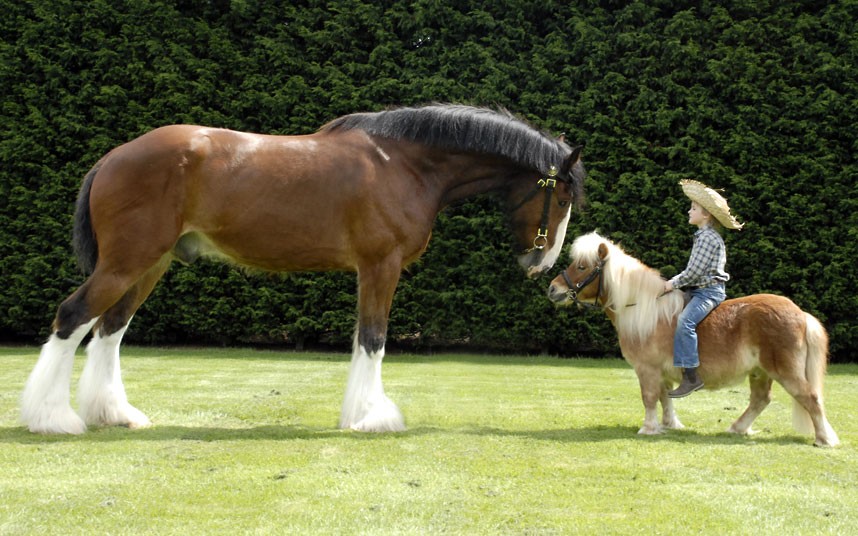
In order for any nutrition program to be effective it has to serve the purpose for the animal you are feeding.  Feeding a Shetland pony a draft horse diet is not only incorrect but also dangerous.

Curiositiesbydickens

To know what and how much to feed you first need to know your horse’s weight, his current body condition and his nutritional needs.

I say it 20 times a week “Feed by weight not volume” and you will see it again under “W” later in the year.  If the rule of thumb is 1.5-2% of your horse’s body weight in feedstuffs per day then you must know the body weight to calculate the percentage.

Continue reading

The ABCs of Equine Nutrition: An A-to-Z guide to better understanding, The Letter A

HappyHorseHealthyPlanet_ABC-Cover2

I originally thought of this as a single blog post but after I started researching I discovered enough information for each alphabet letter to write a book!  With that idea in mind I decided to write a post each week using a different letter of the alphabet.  So at the end of 26 weeks (assuming I can find enough nutrition topics starting with X and Y!) I will have written the book! 

Some letters will have quite a few topics and others not-so-much. If you think of any topics beginning with a letter I have not covered PLEASE send them to me via email.  The more comprehensive the book is the better.

So we will take this journey together beginning with the letter A and progress through each letter discovering, explaining and learning more about the wonderful, confusing, challenging world of equine nutrition.

Let the journey begin…… Continue reading

Choke in Horses

All Choked Up_EquineNutritionNerd

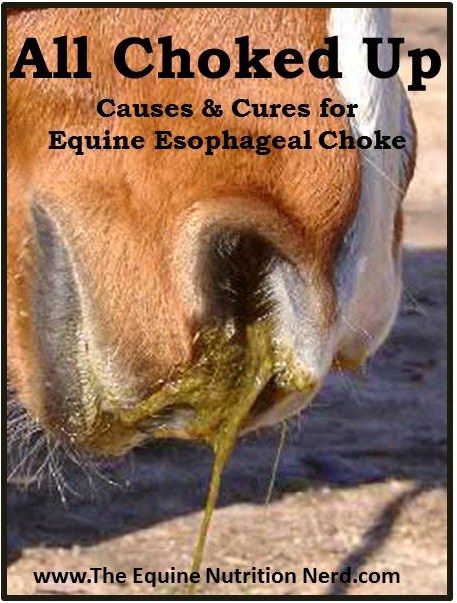
Green slobber, gasping horse, frantic owner.  An episode of choke is one of the worst things a horse and horse owner can experience.

As an equine nutrition nerd I deal with all kinds of feeding programs and in every type I have heard of an incident of a horse choking.  Heck horses can even choke on long grass. With that said, let’s look deeper in to “Need-to-Knows” about equine esophageal choke.

Continue reading