What is Diatomaceous earth and Where does it Come from?
Diatomaceous earth (DE) is the fossilized remains of tiny aquatic organisms called diatoms harvested from the bottom of oceans across the globe. Diatoms are the grass of the oceans and lakes and are the food of water grazers just as grass is the staple food of many land dwelling animals. The diatom skeleton is made of a natural substance called silica.
Silica is very common in nature in various forms and makes up 26% of the earth’s crust by weight. It does not exist naturally in its pure form as it usually reacts with oxygen and water to form silicon dioxide. Silicon dioxide has two naturally occurring forms: crystalline and amorphous. Most Diatomaceous earth is made of amorphous silicon dioxide and this is the one we use for horses.
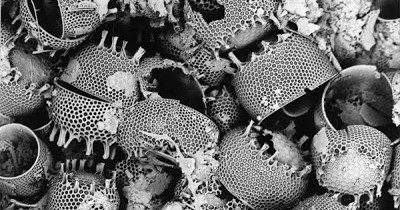
The beautiful geometric shells of the silica remains form massive deposits of Diatomaceous earth which is mined, milled, and processed into two main types, Food Grade and Industrial grade.
There are a number of products containing Diatomaceous earth that are used for pesticide purposes. You’d be surprised at the number of non-pesticide products that contain Diatomaceous earth including skin care products, toothpastes, foods, beverages, medicines, paints, and water filters.
Anything ingested or used around animals is always Food Grade DE which is non-toxic, safe and crushed to a fine powder sometimes sold as “Fossil Shell Flour”.
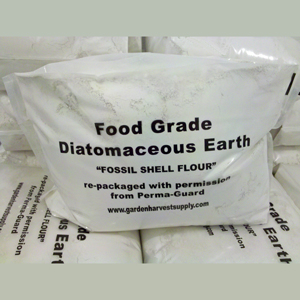
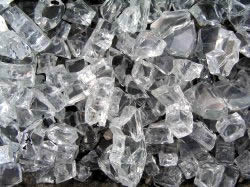
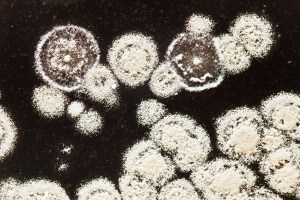
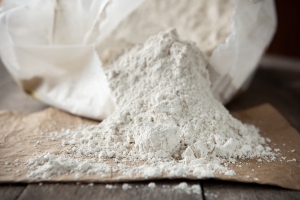
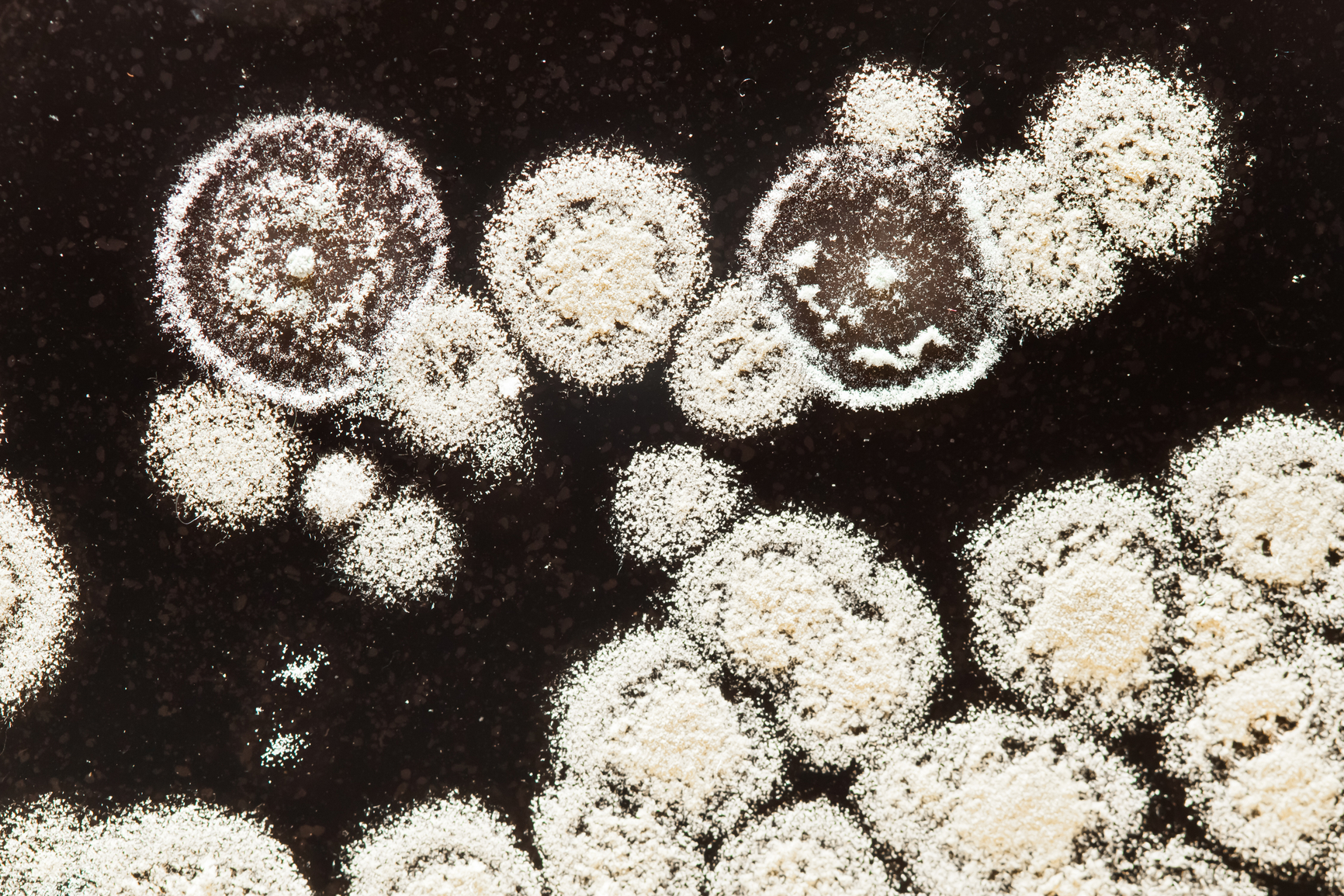
Food grade Diatomaceous earth products are purified and even allowed by the USDA on organic food labels. Food grade DE is used as anticaking materials in feed, and as clarifiers for wine and beer. It is also used as a mineral additive, for detoxification, and as an effective insecticide. This photo of the DE, magnified 7000 times, looks like spiny honeycombs that resemble bits of broken glass.
What is the Value of DE in Equine Nutrition?
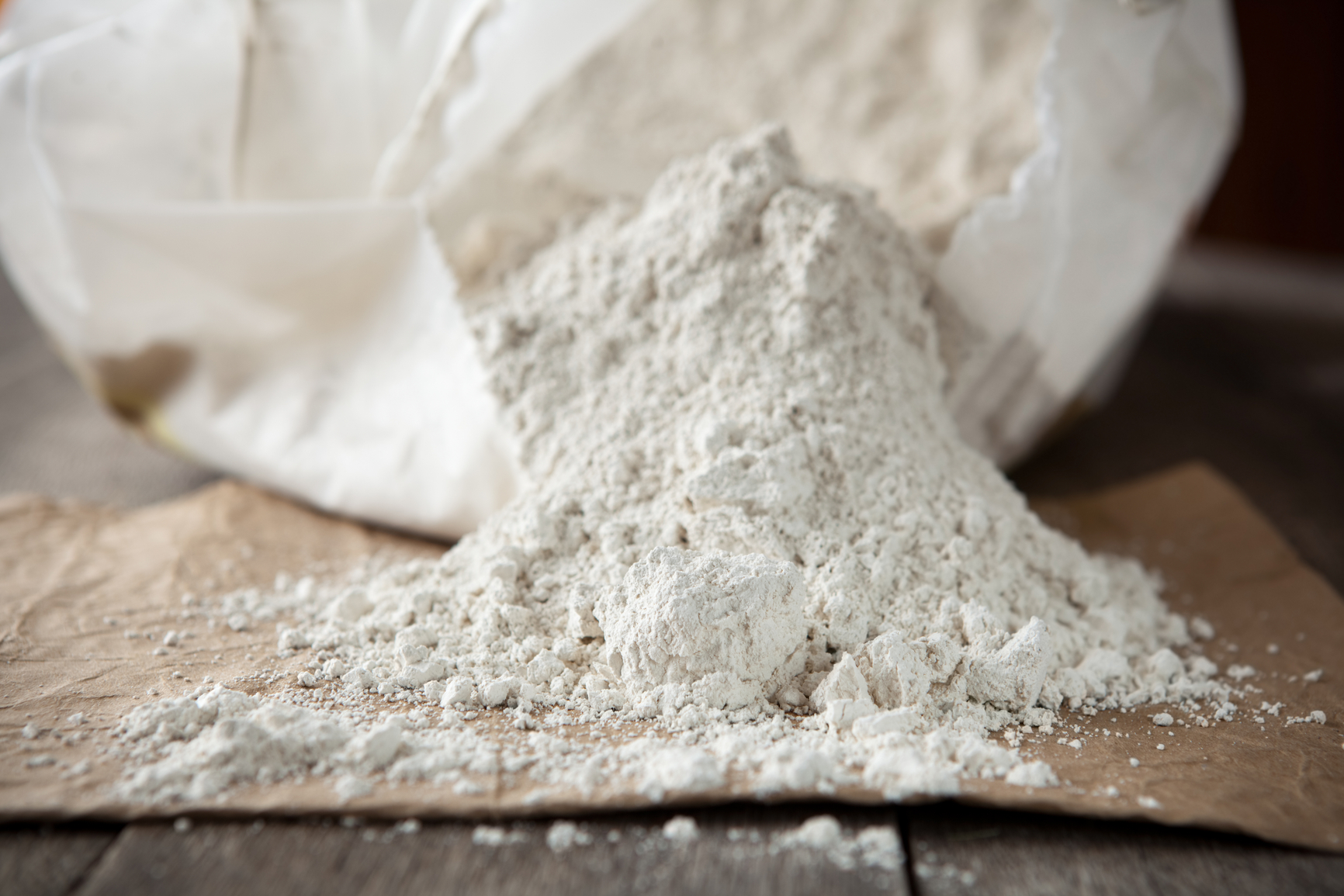
When the diatoms are mined and ground up it ends up as a powder that looks and feels like talcum powder. When added to feed your horse will get the benefit of valuable trace minerals that make up Diatomaceous Earth. DE is approximately 3% magnesium, 33% silicon, 19% calcium, 5% sodium, 2% iron and many other trace minerals such as titanium, boron, manganese, copper and zirconium.
The most common nutritional benefit of DE for horses is parasite control but many horse owners report added benefits such as better coat and/or hoof condition.
As every horse owner (should) know parasites can wreak havoc with equine health. Internal parasites interfere with the absorption of food, cause weight loss, colic and diarrhea.
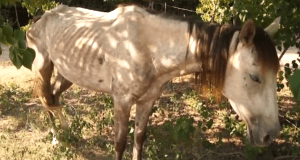
External parasites cause skin infections and an enormous amount of stress to your horse.
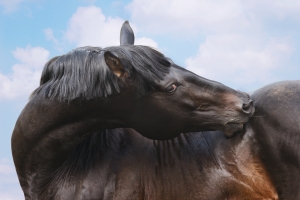
With a good internal and external parasite management program your horse will see an improvement in health, appearance and behavior, as well as assimilation of feed, which means improved weight gain and lowered feed cost.
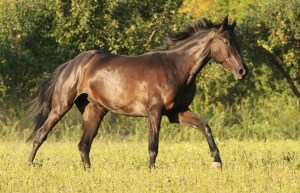
In my experience Diatomaceous Earth is a fantastic natural pesticide that deters all manner of insects that torment our animals. DE shows no indication of mechanical or chemical damage to the animal tissue therefore it can fed to the horse as a step in controlling internal parasites. DE can also be used as a dust for external pests by rubbing into the coat of the animal.
Food grade Diatomaceous earth is a great way to address parasites in your horse, but you should not rely on it as your only form of defense. Controlling intestinal worms in horses is a many layered endeavor that includes other Best Management Practices. Rotating pastures, appropriate pasture stocking rates, new horses being introduced to the herd appropriately, manure management and type or number of parasites needing to be controlled, are all parts of a good equine pest control plan.
How Does DE Work?
We don’t normally think of bad things as “positive” but when it comes to the way DE works, we do. The silica in DE is a semi-conductive mineral which when warmed by body heat becomes negatively charged. When this happens it gives off electrons that attract and absorb positively charged (but bad) things that are small enough to go through the holes. These positively charged things can be bad microbes, free radicals, and other positively charged waste.
Because of the strong charge, each shell can absorb a large number of positively charged substances, whether they be chemical or in the form of bacteria or viruses. After attracting these positively bad things, DE passes through the stomach and intestine, escorting these harmful substances out of the body. Other larger parasites that can’t fit through the holes are “cut up” and killed by the sharp edges of the DE. Don’t worry though; the DE does NOT kill the beneficial bacteria in the gut nor “cutup” the intestinal lining.
Healthy Microbes Are Safe
When Diatomaceous earth is eaten, very little is absorbed into the body and the remaining portion is rapidly excreted. Small amounts of silica are normally present in all body tissues so it is therefore normal to find silicon dioxide in urine but some studies looked at whether this would increase with the addition of DE to a diet. These studies have shown that horses fed DE had no difference in silica amounts in urine samples as the silica in the DE was excreted .
How Do You Feed it to Horses?
If you decide to add DE to your equine management program make sure you purchase a product labeled as food grade or medical grade. These forms will be free of any contaminants or unwanted additives. Avoid the crystalline form of silica, commonly used in swimming pool filters, as the beneficial properties have been changed and other chemicals may have been added.
As each horse is an individual you should cater your DE amounts to several factors; weight and worm count.
Different Doses
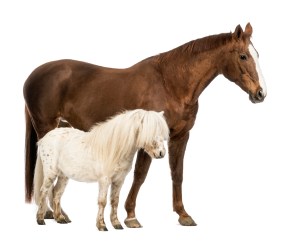
You will need to cater the amount according to body weight as you would the dosage of any wormer. The suggested rate of food grade DE for a 1,000 lb horse is 1 cup a day. Remember, you need to feed it according to what each horse’s worm count demands; higher worm count in a particular horse = higher dosage of DE for that horse.
A minimum of 60 days is suggested for best results, you should re-check the fecal count at 30 days to make sure you are using enough. If fecal counts are not low after the 30 day re-check increase the daily dose of DE. Feeding too small a dose of DE will not give desired results.
Many horse owners just keep their horses on DE as part of their daily ration. In these cases some horses only need a 1/2 cup of DE daily, while others might need a full cup, but I have heard of horses staying worm free on as little as 2 cups per week. As I said before, each animal is different so cater the amount to the animal.
DE does not have an offensive order or taste so you can mix it with water or juice and feed it as a paste, or mix it directly into your horse’s feed. I would still add a bit of water to the feed to keep the dust factor at a minimum.
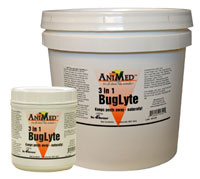
If you are like me you like to keep your horse supplements to a minimum so I use products with additional ingredients that address multiple concerns. There are two DE products I like that have additional benefits. Bug Lyte contains brewers yeast, thiamine, grape seed extract, garlic, niacin, and Diatomaceous earth. NHD Natural Wormer contains slippery elm, kelp, juniper berry, cascara segrada, clove, sage, garlic, and Diatomaceous earth.
Are there Any The Risks With Using DE?
As long as you be sure to use food grade DE you are fine. Food grade Diatomaceous earth is EPA approved to be mixed with grains and used against indoor and outdoor crawling insects. Food Grade DE is USDA approved as an anti-caking agent for animal feed and it is FDA approved for internal and external use. So all the safety agencies confirm that it is nontoxic when used appropriately.
The biggest risk is using the wrong grade of DE so pay attention to which grade of Diatomaceous earth you buy. Industrial grade Diatomaceous earth is mainly used for pool filtering. It has been through heat and chemical processing and is highly toxic if ingested. So it is REALLY important that you only use food grade Diatomaceous earth.
If you haven’t wormed in a while, or have a horse with an extremely high egg count, I encourage you to use a slow introduction to Diatomaceous earth to avoid a detox reaction from a rapid killing of parasites and worms.
There is also some concern about what DE could do to a horse with ulcers or other digestive issues. Personally, I would not want to introduce anything more to an already compromised digestive system so I generally recommend that clients NOT use DE with these horses.
Be sure to consult your veterinarian before switching to a regular DE program, most vets are on board with fecal counts but can be in to a more chemical approach for paarasite control so be prepared for this.
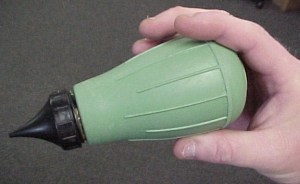
A few other cautions. Some say it is better to use DE it in the morning, as it has been known to elevate energy levels. Also, I have heard of people withholding food from their horse before worming. With DE, or any wormer, you should never “fast” a horse, an empty equine stomach = trouble. Finally, if you are applying DE as a dust externally, use a face mask and apply with a bulb duster.
In Summary:
Many horse owners love the to use Diatomaceous earth topically to dry out wet stalls and to fight the flies manure attracts. The most controversial use of Diatomaceous earth is as a dewormer, but I have found it to be effective and safe. I incorporate DE into my multifaceted deworming program, which includes a bi-annual fecal flotation test, but remember, DE should not be your only means of defense against internal parasites. Incorporate other Best Management Practices into your program to ensure control.
Peace and Good Feed,
~The Nerd
To order a gussied-up PDF version of this article via email for 99 cents Click Here
The author does not recommend this blog be a substitute for veterinary, farrier and dental professionals for the care of your horse. Methods and discussions regarding your horse’s health should be discussed with your horse care professionals and consideration of each animal’s unique characteristics should be taken into consideration.





 The Equine Nutrition Nerd
You must be logged in to post a comment.